

Historic Uzbek Ceremonial Tiara
Historic Uzbek Ceremonial Tiara
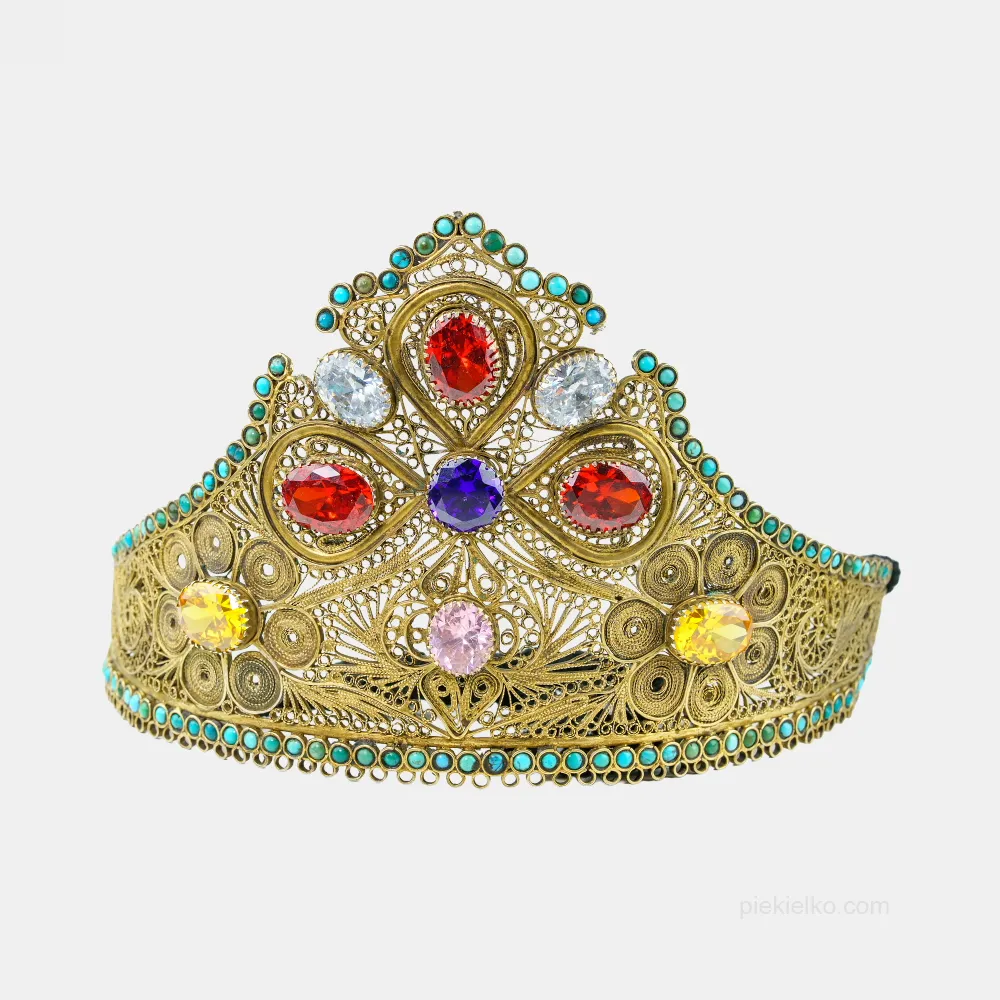
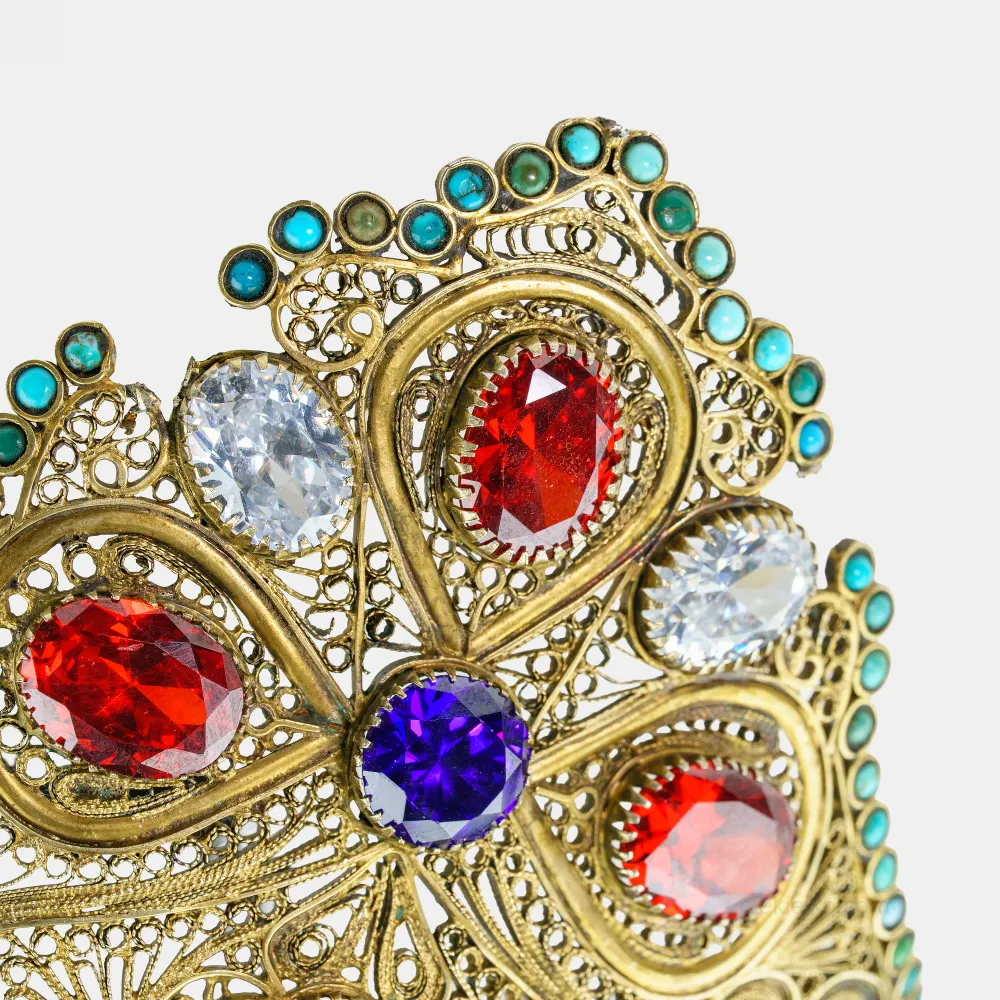
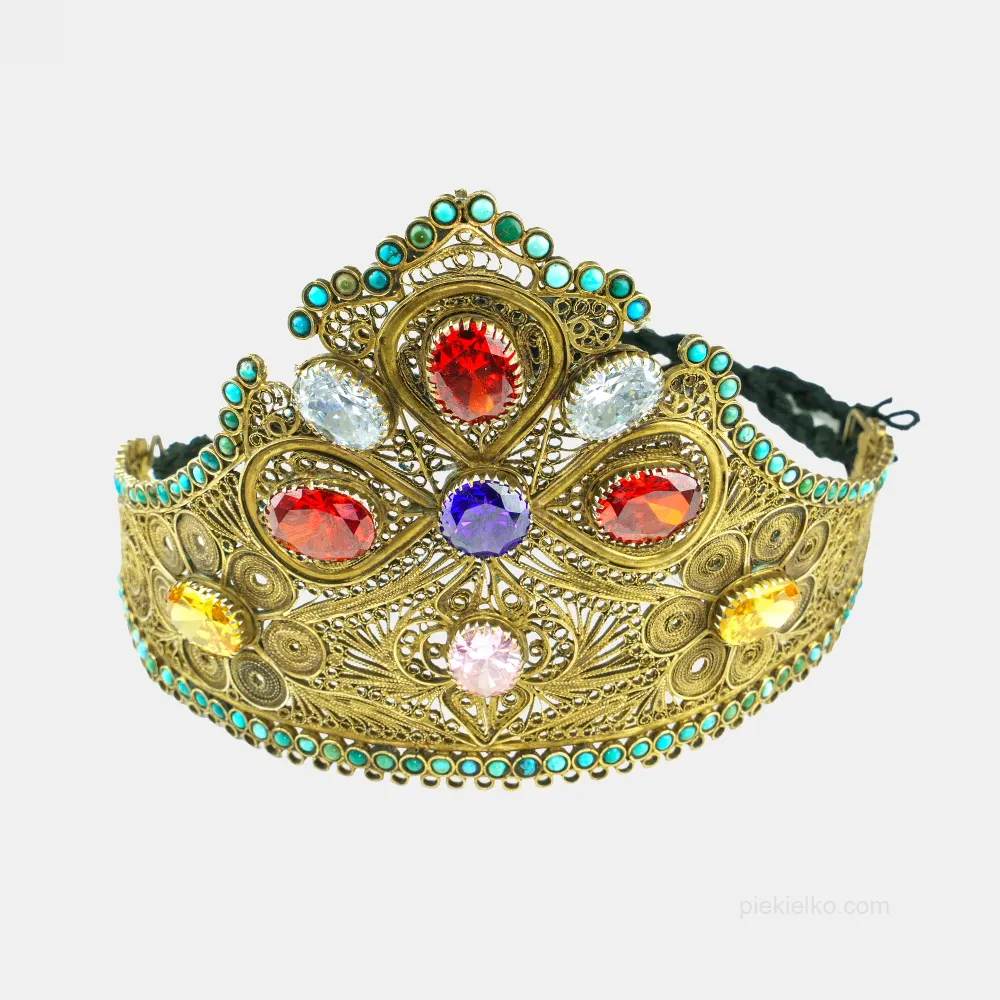
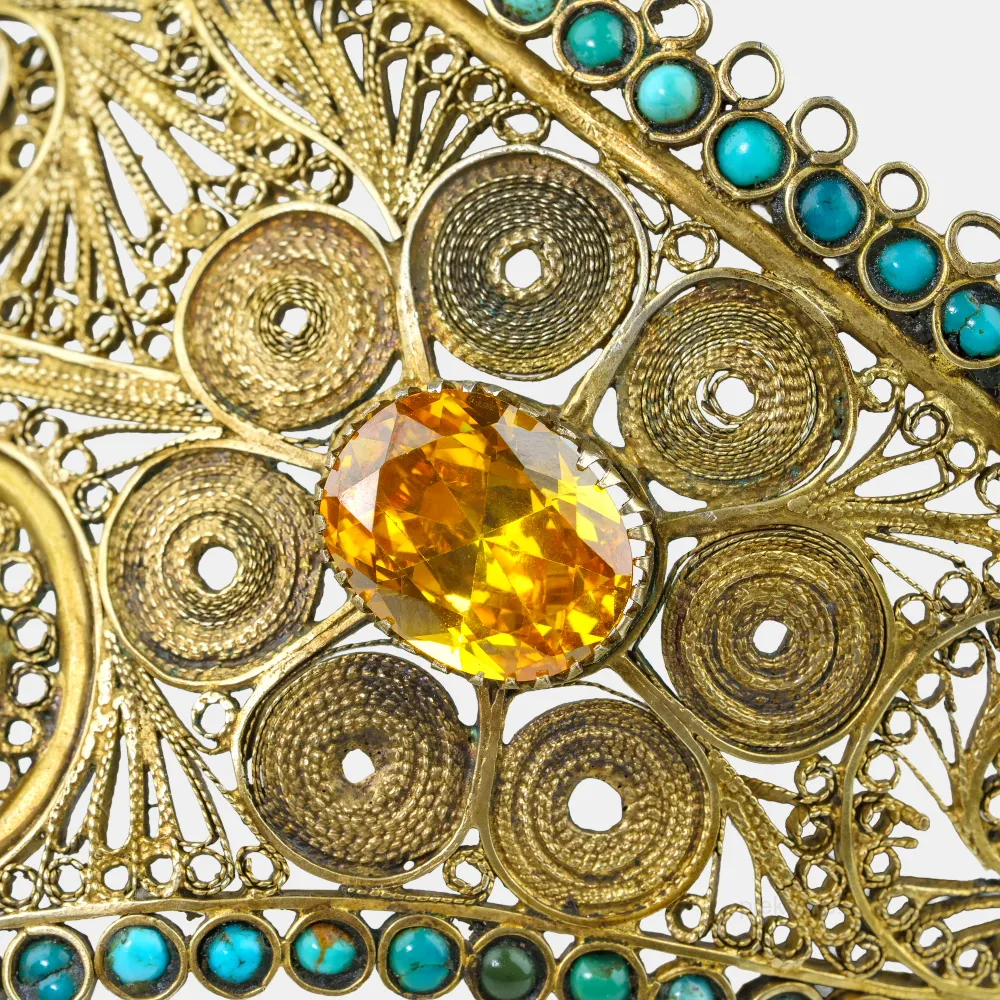
Authentic historic ceremonial tiara (women’s crown) originating from Central Asia, from the territory of present-day Uzbekistan. This object represents traditional female ceremonial headwear, worn exclusively on special occasions of social and family importance. Its scale, form, and complexity clearly indicate that it was never intended for everyday use, but served as a prestigious element of ceremonial attire.
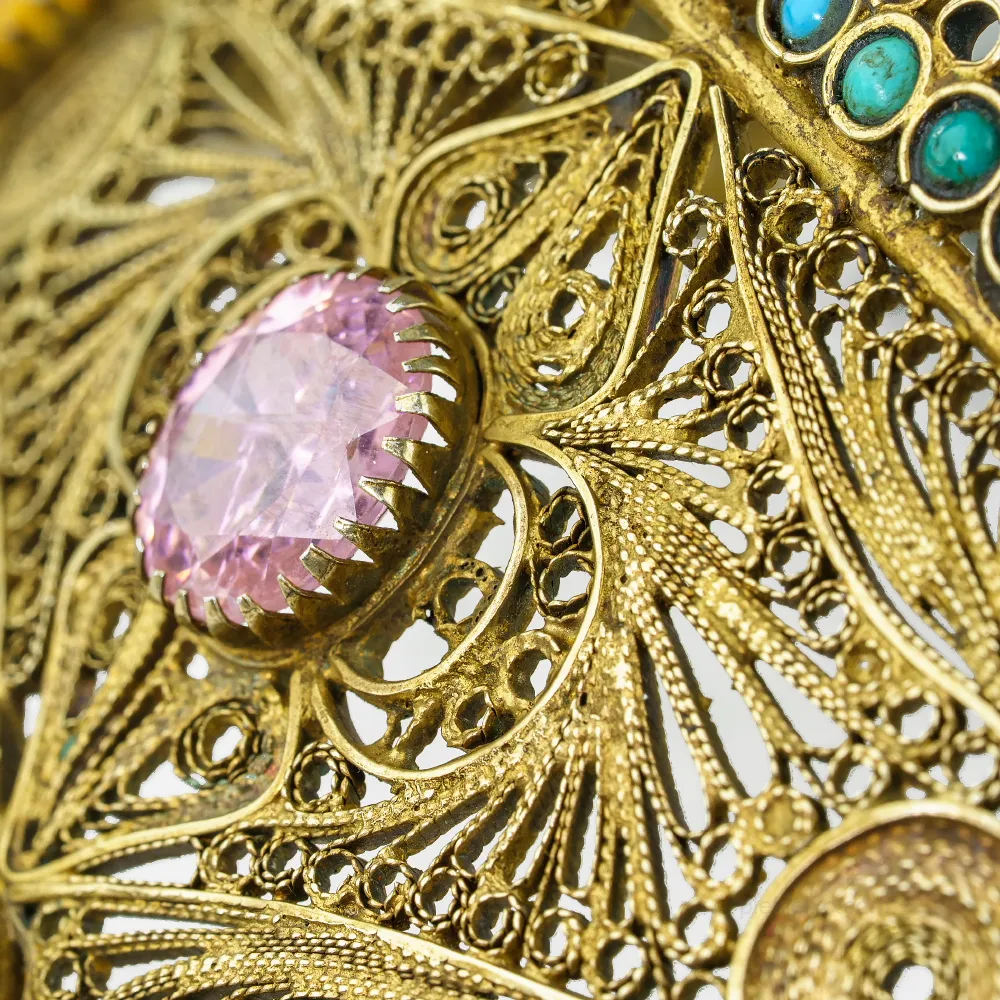
The tiara is crafted from silver with an approximate silver content of 85% and subsequently gilded. The metal composition has been verified using appropriate silver assay testing materials, allowing for a reliable identification of the alloy. The gilding enhances both the visual depth and the representative character of the piece, consistent with historic Central Asian metalwork traditions.
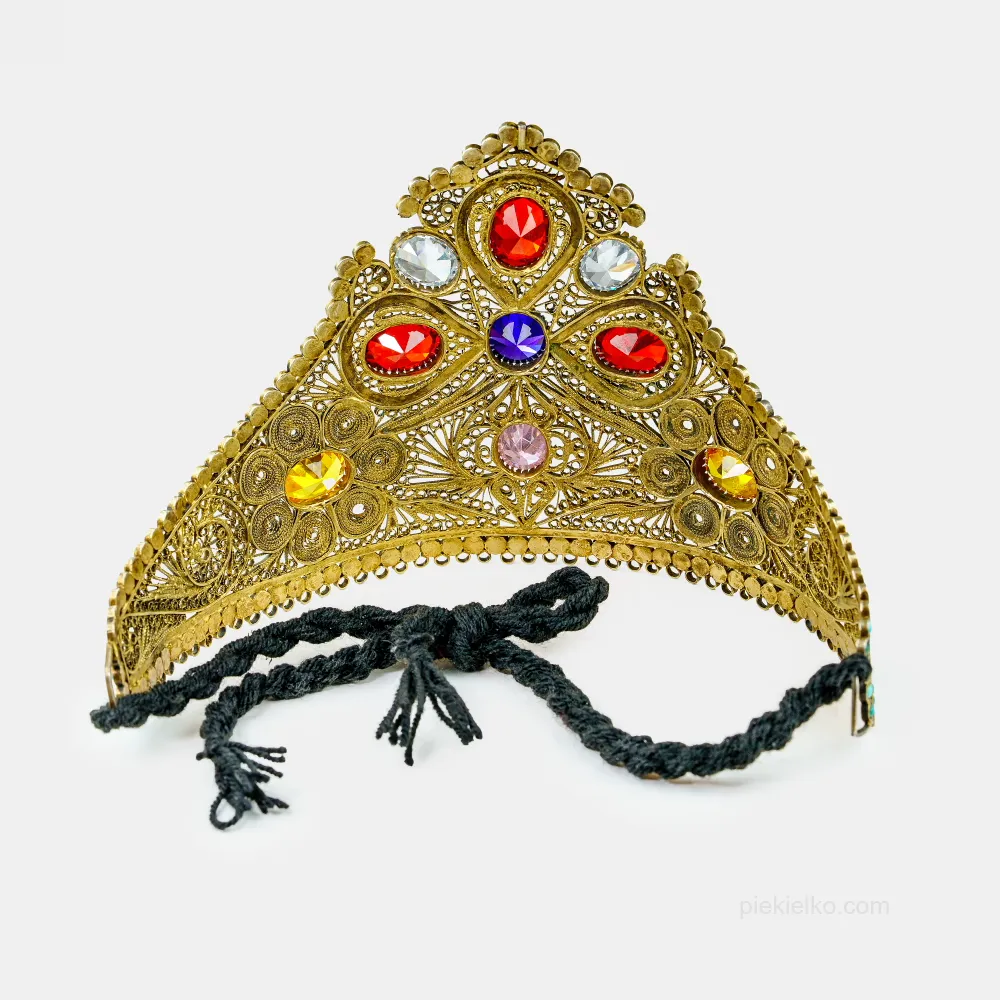
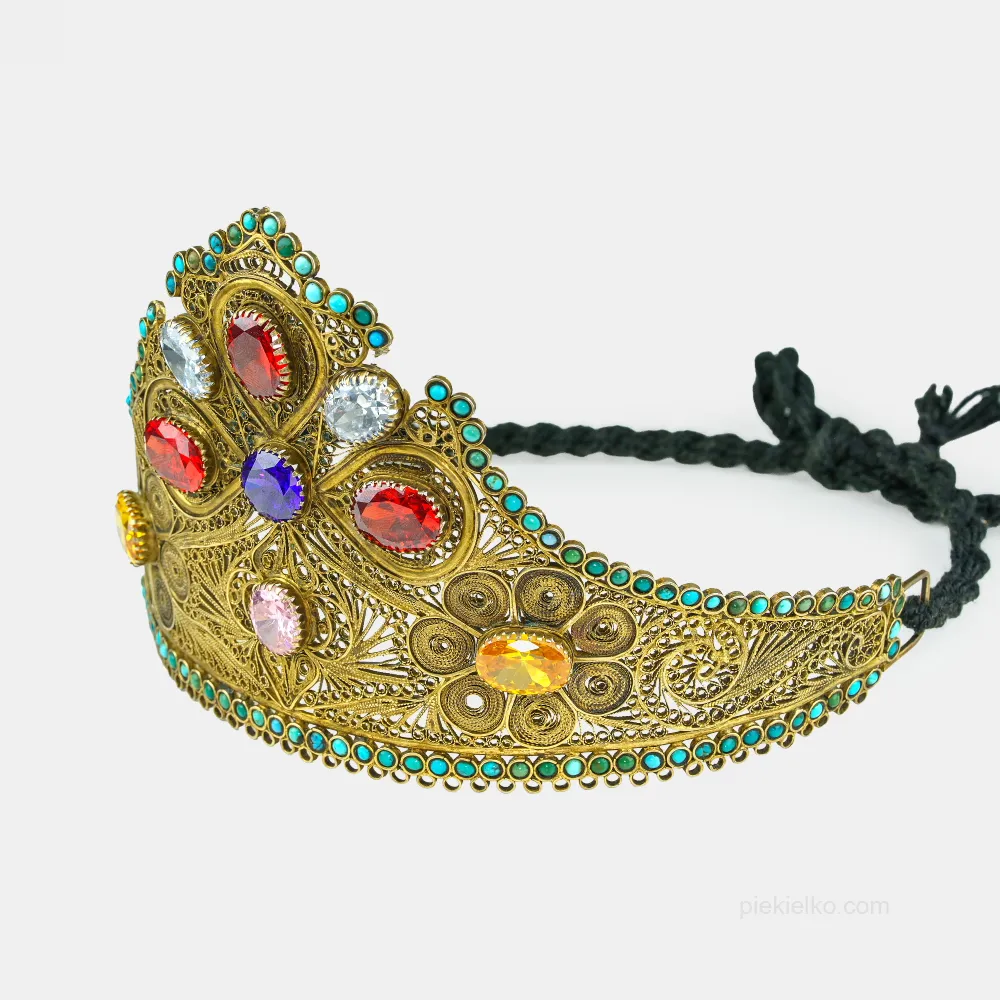
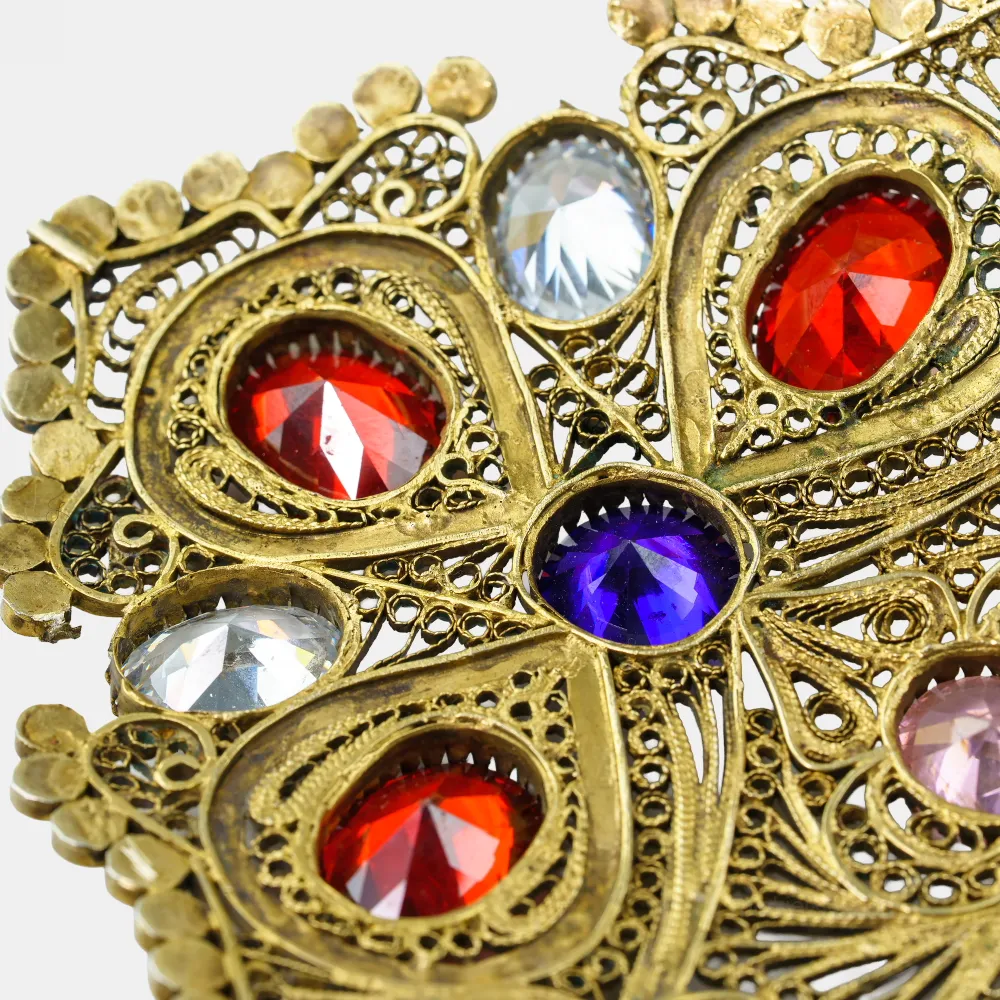
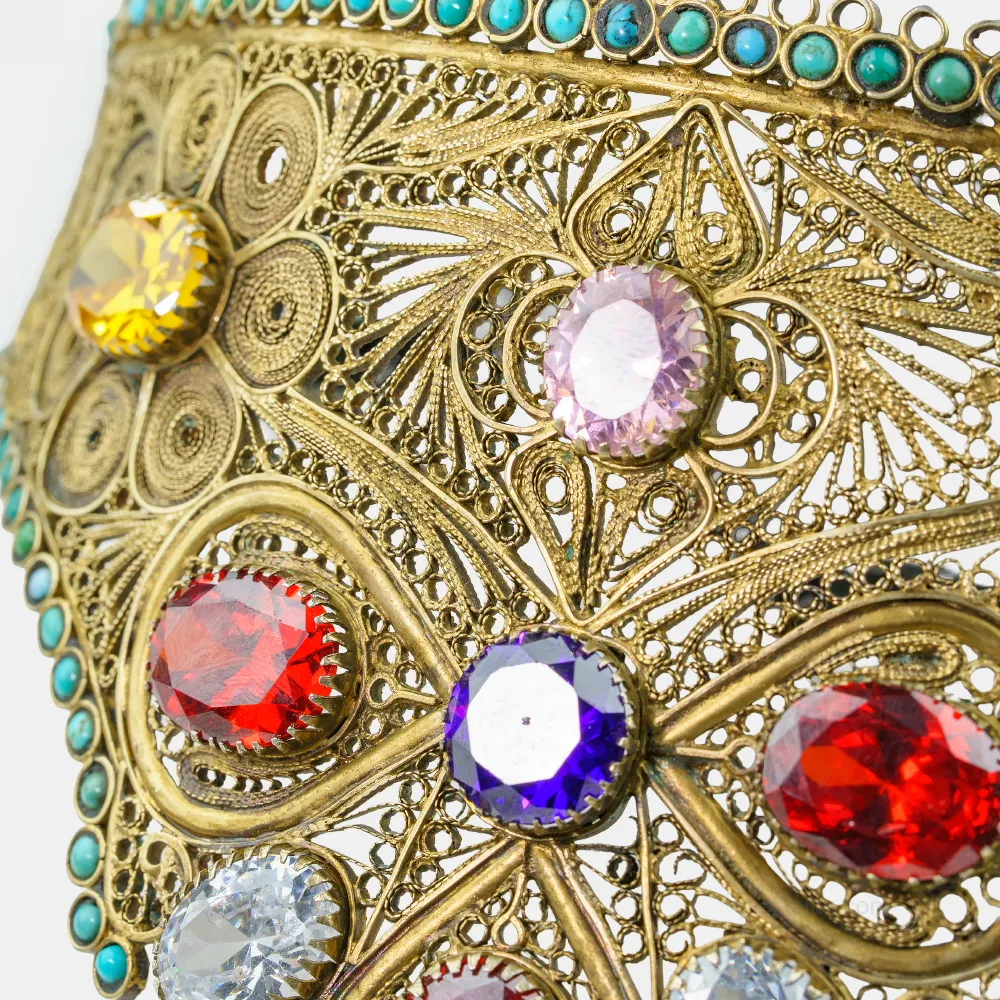
The structure is executed using the handmade filigree technique, characteristic of Central Asian silversmithing. Fine silver wires, spirals, and rosette motifs are meticulously formed and assembled into an openwork construction. Slight irregularities and variations in detail are inherent to hand craftsmanship and confirm that this is not a modern reproduction or factory-made object.
Along the outer edges, the tiara is set with natural turquoise beads, arranged in a continuous decorative line. Turquoise was among the most commonly used ornamental stones in the region and was valued for its color and visual contrast rather than gemological uniformity. The natural variation in tone and structure of the stones is typical for historic jewelry of this cultural area.
The central sections are adorned with colored glass elements in red, clear, yellow, and violet tones. The use of colored glass was historically standard in Central Asian ceremonial jewelry, providing strong chromatic contrast and light reflection. Its presence is fully consistent with the period and regional aesthetic and should be regarded as an authentic decorative feature rather than a substitution.
The open-back construction with preserved tying elements confirms its function as a ceremonial headpiece rather than a symbol of political authority. While such objects are sometimes referred to colloquially as “crowns,” the correct historical and ethnographic term is a ceremonial tiara or women’s ceremonial headdress. This piece constitutes a historical and collectible artifact, exceptionally rare on the contemporary market and typically encountered today only in museum collections or advanced private holdings.


